Bernard's Miyawaki forest

Publication Date: June 20, 2026 | 12:00am
About This Article
In this compelling feature from The Philippine Star's Food for Thought column, author Chit U. Juan explores Bernard Restificar's groundbreaking work at Oikos Orchard & Farm in Sibonga, Cebu. The article highlights the innovative Miyawaki method for rapid reforestation, sustainable agriculture practices, and how one entrepreneur turned banker is transforming his community through regenerative farming, biodiversity conservation, and social responsibility.
The Miyawaki forest method allows the planting of as many as 64 trees in a small area of land, sometimes just 12 square meters or the size of a parking slot in a building. It involves planting native trees to create dense, ultra diverse micro forests in small, urban spaces.
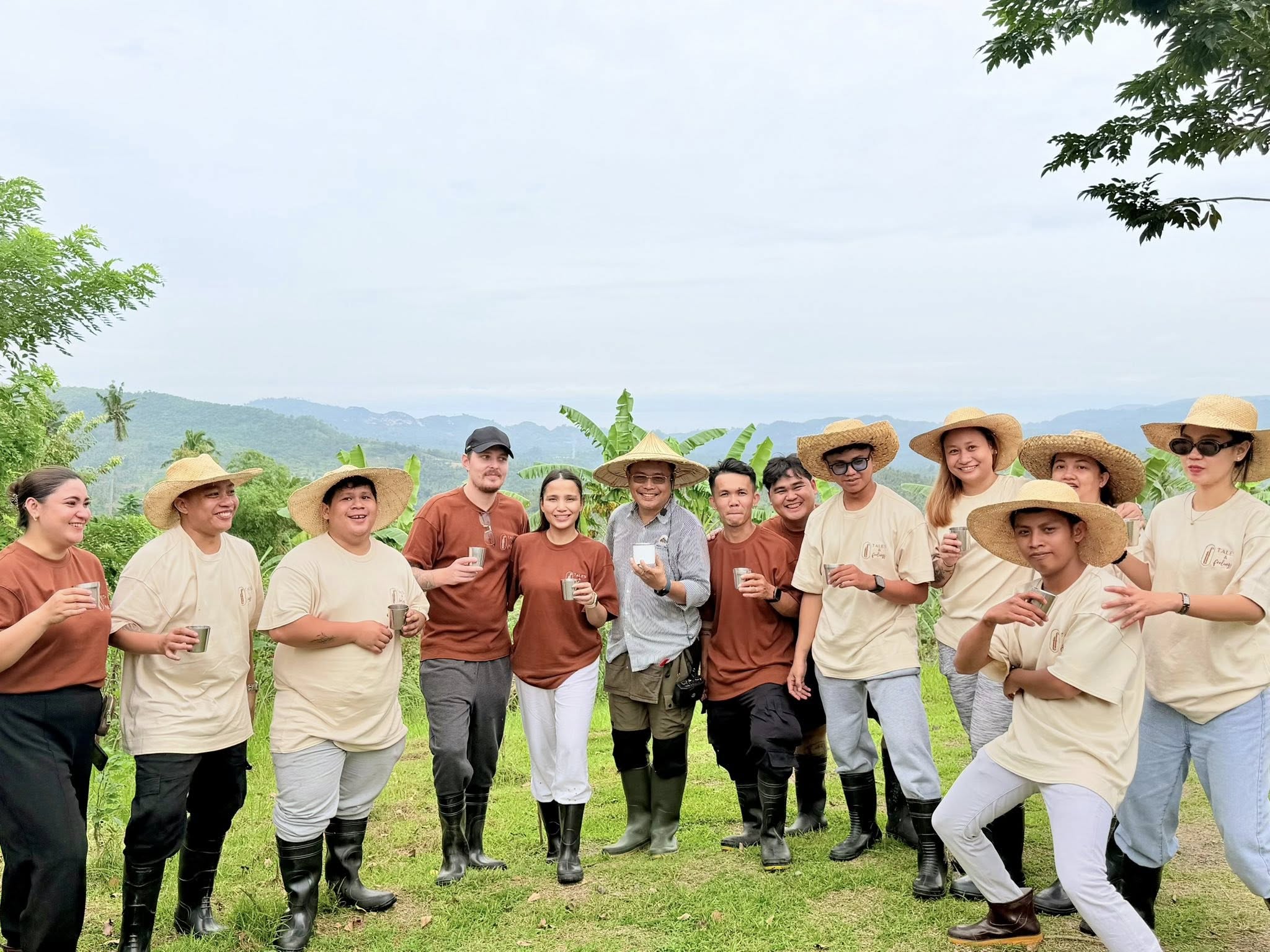
While vacationing in Cebu, a friend thought of visiting a Slow Food farm in faraway Sibonga and lo and behold, the owner is a practitioner of the Miyawaki method. I saw with my own two eyes how Bernard Restificar used 64 native trees in one small area of his two and a half-hectare property. Bernard can very well spread them out but he makes these models to inspire others that reforestation can be done even in smaller places.
He even has a model of a family plot where each of his children planted a different native tree along with his spouse, and these five trees are on a space two square meters in size. He believes the roots have a language of their own and will thrive. The biggest tree has roots deeper than the rest and the newcomer trees will find their own space for their roots in the earth.
The system requires that you dig the soil about a meter deep for aeration and then add biomass and natural fungi. The dense planting forces the trees to compete for sunlight and grow deep, collaborative root networks instead of just spreading wide. It's like trees doing strength training!
The number one rule though is to choose only native trees. That means no mahogany, no golden showers, just the old narra, bitaog, yakal and other native species, saplings of which are given away by your local Dept. of Environment and Natural Resources (DENR) field office. These saplings are grown because someone else paid for them in exchange for cutting an old tree. Every person who asks to cut an old tree needs a permit and part of the requirements is for one to plant a hundred trees or sow 100 saplings.
At Bernard's farm, he shared some tindalo saplings with us and this is a very significant tree species. Tindalo is the same tree which Magellan used to make the first cross when he landed in Cebu 500 years ago. It must really be endemic and now it is also holier than most. So we took a few saplings to complete our native tree collection in Cavite.
Another method that caught my eye is Bernard's use of the Espalier method, a style of planting fruit trees. The stems are trained to grow sideways in just a two-dimensional fashion – like grapes growing in a vineyard along a line that has a wire and pole restriction. All other lateral branches are trimmed or cut and the tree does follow only the direction of the "fence" trellis or even a flat wall. In Bernard's farm, he has tried the Espalier method on guava, mulberry and soon, they may try it on coffee, too. Though he used it to just save space, it looks pretty cool to see other fruit trees growing this way and may interest even other fruit growers, not just grape or wine enthusiasts.
Being faced with the challenge of a decimated farm and a community looking for income made Bernard creative and active in research for what trees to grow which can also help his community of farmers. At Oikos, Bernard showed us what is the start of an ube (purple yam) planting program among his village farmers. He gives them the planting materials and he will buy the produce once ready. Ube is the new matcha, as people now say. It has a big global demand and even local manufacturers have variants of cookies, cakes and many desserts calling for ube, the now golden purple powder. Bernard has found a new sustainable project for Upper Bae, Sibonga, Cebu.
These activities and his choice of growing with biodiversity in mind has made Oikos a Slow Food farm, certified by the Slow Food international office in Italy. He does produce good, clean and fair food. At Slow Food themed lunches at the farm, visitors taste tree snails cooked adobo style and chicken tinola with native root crop called butig and stewed in lemongrass.
Another philanthropic side of Bernard made him build a chapel on his property. He learned that his townmates paid P200 each way to get to the nearest church on Sundays. That is P400 per Sunday per family which is a lot in this fourth-class municipality. He thought it best to ask the archbishop if he could build this chapel so his community can have a church closer to their homes.
There is a lot going on for this banker turned entrepreneur and now fruit farmer. Just in his early 50s, Bernard has more to plant, to grow and to influence. Luckily, his daughter is already showing interest in the farm, especially because he also offers "glamping" activities onsite. He built tents that are perched on the highest points of the property, with a stunning view of Bohol island and a beautiful valley right below.
Oikos is indeed a respite from the hot Cebu traffic and is a good model for an organic farm, orchard and forest. It is a learning site for agriculture, both for TESDA and Agricultural Training Institute (ATI).
Yes, it takes a creative mind who listens to the message from the Universe to be blessed with a gift that unwraps itself day by day, finding purpose in everything that happens. Mabuhay ka, Bernard!
More Stories Coming Soon
We're regularly featured in local and national media outlets for our work in regenerative agriculture and sustainable farm development. Check back soon for more articles, interviews, and press coverage about Oikos Orchard & Farm.